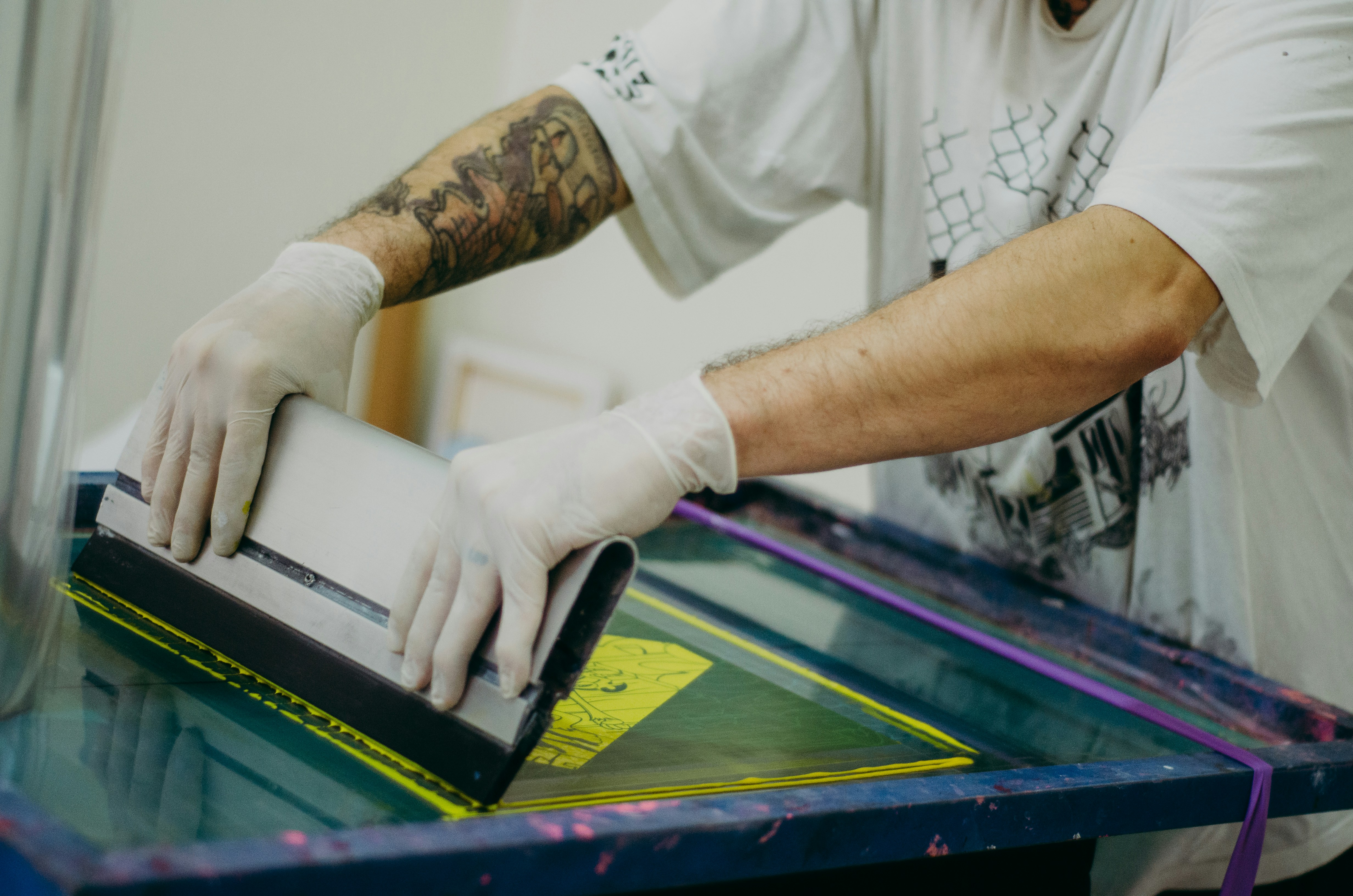
If you've never ordered screen printed apparel before, the process can seem pretty straightforward:
Pick a shirt.
Send your artwork.
Tell the printer how many you want.
Get your shirts.
In reality, there are several decisions that can significantly affect the price, quality, and turnaround time of your order.
Whether you're ordering 50 shirts for a local event or thousands of garments for a brand, understanding these factors before you request a quote can save you time, money, and headaches.
At Ink Made, we work with businesses, brands, artists, organizations, and touring teams on screen printing and large-volume apparel production. We've seen firsthand how much smoother an order can be when these details are figured out before production begins.
Here are the most important things to know before placing your first screen printing order.
1. Know How Many Shirts You Actually Need
One of the first questions your screen printer will ask is:
"How many are you looking for?"
Quantity is one of the biggest factors affecting your per-shirt cost.
Screen printing requires setup work before production begins, including preparing screens and setting up the press. Those fixed costs are spread across the number of garments being printed.
For example, an order of 50 shirts has to absorb those setup costs across 50 garments.
An order of 1,000 shirts spreads those same types of setup costs across a much larger production run.
That's why larger orders generally have a lower cost per shirt.
Before requesting a quote, try to have a realistic quantity in mind.
If you're unsure, ask your printer about pricing at multiple quantities, such as:
-
50
-
100
-
250
-
500
-
1,000
-
2,500+
You may find that increasing your order slightly results in a significantly lower per-unit cost.
At Ink Made, we can help you compare different quantities so you can see how your per-unit cost changes as your order grows.
2. Understand How Many Colors Are in Your Design
Screen printing is different from digitally printing an image.
Each ink color in a traditional screen printed design generally requires its own screen and production setup.
A simple design might be:
1 color
A more complex design could be:
4 colors
or:
6+ colors
More colors generally mean additional setup and production costs.
That doesn't mean you should automatically simplify your artwork.
Instead, understand how the number of colors affects your quote before finalizing the design.
If you're working with a tight budget, your printer may also be able to recommend ways to achieve a similar visual effect with fewer colors.
3. Your Shirt Color Matters
The color of the garment can affect the printing process.
Printing a design on a white shirt isn't necessarily the same as printing that design on a black shirt.
Dark garments often require an underbase to help the ink colors appear bright and opaque.
For example, a bright red design printed directly onto a black garment can look very different from that same red printed on white.
Your printer may recommend an underbase or other adjustments depending on the artwork and garment.
This can affect both the appearance and cost of the finished print.
At Ink Made, our production team reviews artwork and garment combinations before production so we can identify potential issues before they become production problems.
4. The Blank Garment Makes a Huge Difference
You're not just choosing a color.
You're choosing the actual garment your customers will wear.
Different blanks have different:
-
Fits
-
Weights
-
Fabric compositions
-
Finishes
-
Price points
-
Print characteristics
Some popular options include:
-
Gildan
-
Comfort Colors
-
Shaka Wear
-
LA Apparel
-
Bella+Canvas
A heavyweight oversized shirt can create a completely different customer experience than a lightweight retail-fit shirt—even if the same artwork is printed on both.
If you're building a brand, don't choose a blank solely because it's the cheapest option.
Think about the product you're actually trying to sell.
If you aren't sure which blank makes sense for your project, that's something you can discuss with your Ink Made sales representative before placing the order.
5. Tell Your Printer Where You Want the Design
A screen printing quote can change depending on the number of print locations.
For example:
Front only
is different from:
Front + back
which is different from:
Front + back + sleeve
Before requesting a quote, know which locations you want printed.
Common print locations include:
-
Left chest
-
Full front
-
Full back
-
Sleeve
-
Neck
-
Pocket
-
Bottom hem
Additional locations generally require additional setup and production.
When requesting a quote from Ink Made, include every print location you're considering so we can provide a more accurate project estimate.
6. Your Artwork File Matters
One of the easiest ways to slow down an order is to submit artwork that isn't production-ready.
Whenever possible, provide high-quality artwork in a format your printer can work with.
Vector files such as:
-
AI
-
EPS
-
PDF
-
SVG
are often preferred for screen printing because they can be scaled without losing quality.
If you're working with raster artwork, make sure the resolution is appropriate for the final print size.
Your printer may also need to separate the artwork into individual ink colors before production.
If you're unsure whether your file is ready, ask before placing the order.
It's much easier to fix artwork before production starts than after the shirts have already been printed.
7. Ask About Minimums
Different printers have different minimum order quantities.
Some screen printers specialize in smaller runs, while others are set up specifically for larger production orders.
Before you spend time preparing a quote, ask:
"What is your minimum order?"
Also ask how pricing changes as quantities increase.
If you're ordering 75 shirts, for example, it may be worth asking what 100 shirts would cost.
The additional 25 shirts may be relatively inexpensive compared with the original setup costs.
8. Know Your Deadline Before Ordering
One of the most important pieces of information you can give your printer is your actual deadline.
Don't simply say:
"How fast can you get these done?"
Instead, tell them:
"I need these delivered to New York by September 15."
That gives the printer the information they need to work backward from your deadline.
Your timeline may include:
Artwork approval → blank sourcing → production → quality control → folding/packing → shipping → delivery
If you're working toward an event, concert, product launch, or tour, give yourself a buffer whenever possible.
Don't plan for the shirts to arrive the morning you need them.
At Ink Made, deadlines are especially important when we're coordinating production with shipping, fulfillment, or tour dates. The earlier we know your required delivery date, the more options we have to build a reliable production and shipping schedule.
9. Shipping Is Part of Your Total Cost
The price per shirt isn't necessarily your final cost.
Your total project cost can include:
-
Blank garments
-
Screen setup
-
Printing
-
Additional print locations
-
Folding
-
Bagging
-
Labeling
-
Packaging
-
Freight
-
Shipping
-
Rush services
For larger orders, shipping can become a meaningful part of the total project cost.
If you're comparing quotes from multiple printers, make sure you're comparing the total delivered cost, not just the advertised printing price.
At Ink Made, we also work with shipping providers directly to help secure competitive shipping rates for our customers. For larger orders, strategically planning how merchandise is packed and shipped can make a meaningful difference in the overall project cost.
10. Ask About Folding, Bagging, and Finishing
What happens after the shirt comes off the press?
Depending on your project, you may need:
-
Folding
-
Individual polybagging
-
Size stickers
-
Hangtags
-
Neck labels
-
Relabeling
-
Carton packing
-
SKU separation
If you're selling the shirts online or shipping them to customers, these services can save you a significant amount of labor.
If you're sending merchandise to a tour, event, retailer, or fulfillment center, ask your printer how the finished merchandise will be packed.
At Ink Made, we can coordinate finishing and packing requirements as part of the production process, helping your merchandise arrive ready for its next step.
11. Understand the Difference Between a Mockup and the Finished Shirt
A digital mockup is useful for visualizing your design, but it isn't a perfect representation of the physical product.
The final shirt can look different because of:
-
Fabric color
-
Ink color
-
Garment texture
-
Print size
-
Underbase
-
Ink opacity
-
Print location
If the exact appearance of the print is critical, ask about getting a physical sample or proof before committing to a large production run.
This can be particularly important for premium apparel, complicated artwork, or large-volume orders.
12. Ask How the Order Will Be Packed
If you're ordering 1,000 shirts, you don't want to discover after production that everything is packed in a way that doesn't work for you.
Think about what happens after the printer finishes production.
Do you need:
10 boxes separated by size?
Merchandise separated by design?
Individual shirts bagged?
Boxes labeled for different destinations?
If the shirts are going to multiple locations, tell your printer before production begins.
The earlier your printer knows about your fulfillment requirements, the easier it is to build them into the production process.
This is especially important for Ink Made customers shipping merchandise to multiple venues, warehouses, retailers, or tour stops.
13. Don't Automatically Choose the Cheapest Quote
When comparing screen printers, price matters—but it isn't the only factor.
Ask:
-
What garment are they using?
-
What ink are they using?
-
How long will production take?
-
Is folding included?
-
Is shipping included?
-
How is quality control handled?
-
What happens if there's a production issue?
-
Can they handle reorders?
-
Can they handle rush orders?
-
Can they scale with you?
A printer that costs slightly more per shirt but consistently delivers on time may ultimately save you money.
This becomes especially important when you're working around a hard deadline.
At Ink Made, we work with both growing businesses and large-volume clients, so our goal isn't simply to produce one order. We want to build production systems that can continue working as your apparel needs grow.
14. Know What Happens If You Need More Shirts
This is something people often overlook when placing their first order.
You may think you need 500 shirts.
Then you sell them faster than expected.
What happens next?
Ask your printer:
"How quickly can I reorder this?"
This is especially important if you're selling merchandise for:
-
A clothing brand
-
An event
-
A concert
-
A tour
-
A product launch
-
A seasonal promotion
At Ink Made, we've handled situations where clients needed merchandise replenished much faster than originally planned.
Our Stock Program allows us to keep selected blank garments at our warehouse, allowing us to begin production quickly without necessarily waiting for a new blank-garment order.
In some situations, we've been able to handle rush restocks the same day they're ordered, depending on the project and production requirements.
For businesses and artists selling merchandise, having a fast reorder option can be just as valuable as getting a good initial price.
15. Give Your Printer All the Information Upfront
The more information you provide when requesting a quote, the more accurate your quote is likely to be.
A good quote request should include:
Quantity:
500 shirts
Garment:
Specific blank or desired style
Colors:
Black shirts
Print:
Full front, 3 colors
Artwork:
Attached production-ready file
Finishing:
Fold and bag
Deadline:
Need delivered by October 10
Shipping:
Albuquerque, NM
If you're shipping to multiple locations, include those destinations as well.
This gives your printer a much clearer picture of the project.
If you already have this information ready, you can send your project details directly to sales@inkmade.us and our team can help you determine what information is needed for an accurate quote.
Your First Screen Printing Order Checklist
Before placing your order, make sure you know:
☐ How many garments you need
☐ Which garment you want
☐ Garment colors
☐ Number of print colors
☐ Print locations
☐ Artwork format
☐ Desired print size
☐ Quantity by size
☐ Finishing requirements
☐ Delivery address
☐ Required delivery date
☐ Shipping requirements
☐ Your budget
☐ Your reorder plan
The more of these questions you can answer upfront, the smoother your order will be.
Final Thoughts
Your first screen printing order doesn't have to be complicated.
The key is understanding that the shirt itself is only one part of the project.
Your quantity, artwork, garment, colors, print locations, finishing requirements, deadline, and shipping plan can all affect the final result and cost.
The best screen printing partners aren't just there to put ink on a shirt. They should be able to help you make decisions about the entire production process.
At Ink Made, we work with businesses, brands, artists, organizations, and touring teams on projects ranging from smaller apparel runs to large-volume screen printing, fulfillment, and tour merchandise production.
If you're placing your first order, don't be afraid to ask questions.
A good printer should be able to explain what you're paying for, why it costs what it does, how long it will take, and what happens after the shirts leave the press.
If you're ready to talk about your project, contact the Ink Made team at sales@inkmade.us.
Getting those answers before production begins can save you a lot of problems later.


