
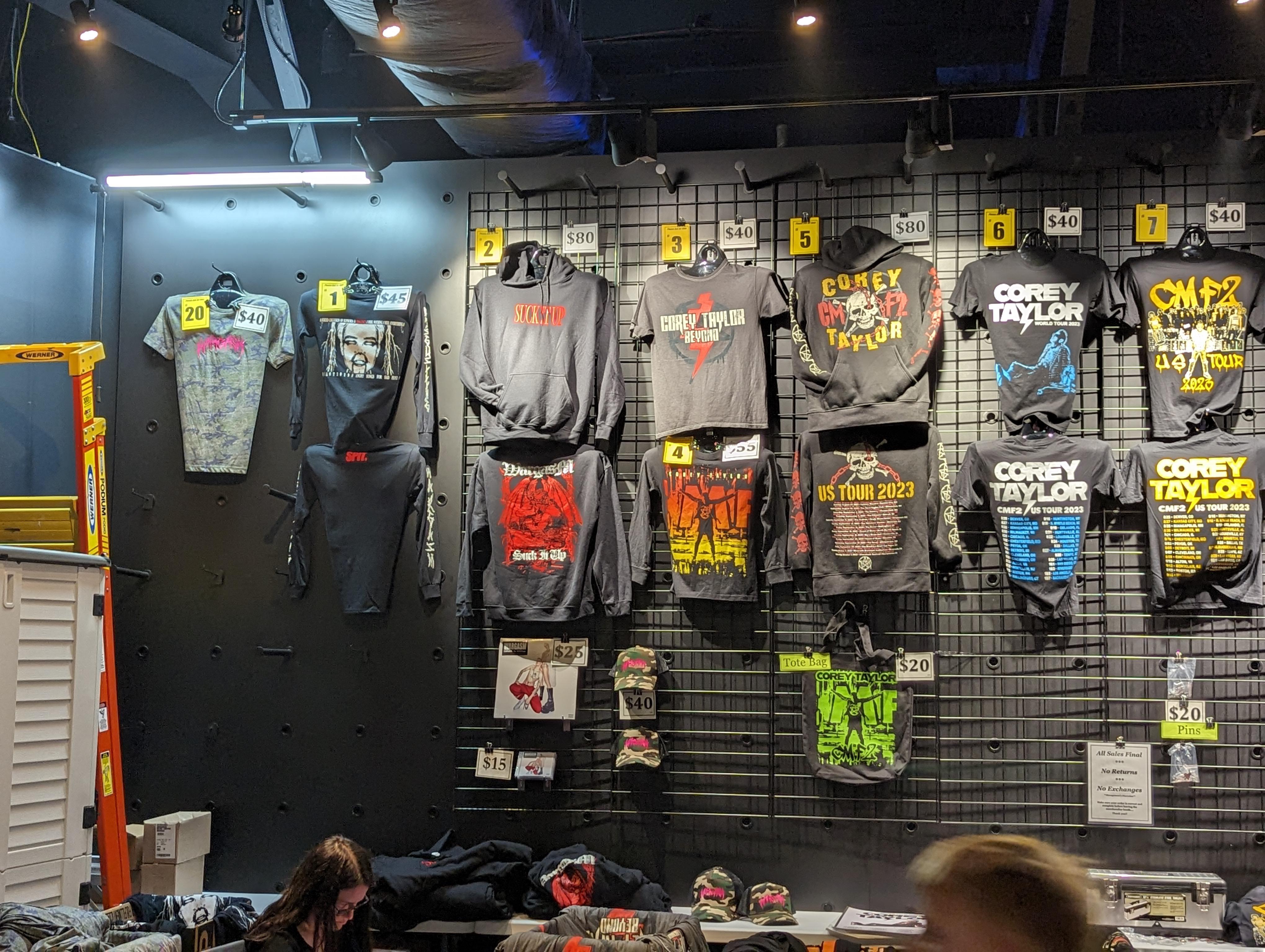
One of the biggest questions artists and managers face when planning tour merchandise is:
How many designs should we make?
It can be tempting to create as many designs as possible. More designs give fans more choices and can make a merch table look impressive.
But every new design also means more inventory, more sizes, more production costs, and more products to manage.
The goal isn't to have the most designs.
The goal is to have the right number of designs that you can actually keep stocked and sell.
So, How Many Designs Should You Have?
There isn't one answer for every artist, but a good starting point is:
New Artist / Small Tour
2–4 designs
Growing Artist / Mid-Size Tour
4–7 designs
Established / Headlining Artist
6–10+ designs
These are guidelines, not rules. Your audience, tour size, merchandise budget, storage capacity, and ability to restock should all influence the decision.
If this is your first tour, we'd generally recommend starting smaller and learning what your fans actually want to buy.
Don't Confuse Designs With Products
A design and a product aren't necessarily the same thing.
For example, one graphic could be available as:
- T-shirt
- Hoodie
- Long sleeve
That's one design but three products.
Now add five sizes to each product and you've created 15 different size/product combinations.
This is why adding "just one more design" can quickly create a much larger inventory commitment.
Don't Spread Your Inventory Too Thin
One of the biggest mistakes you can make is creating too many designs and not ordering enough of any of them.
Imagine you have a $10,000 merchandise budget.
You could spread that money across 10 different designs, giving each product a relatively small inventory position.
Or you could focus on 4–5 strong designs and put more inventory behind the products you believe will sell.
For most newer artists, the second strategy is easier to manage.
You want to have enough inventory of your best products to avoid selling out immediately.
Give Your Merch Table a Few Hero Products
Rather than trying to make every product equally important, identify the products you expect to sell the most.
For example:
Hero T-shirt
Your main graphic or artist design.
Hero Hoodie
Your primary premium product.
Secondary T-shirt
Another strong design.
Tour Design
A tour-specific or limited product.
You can then put more inventory behind these products and use your remaining budget for additional designs or accessories.
Use Your First Shows to Learn
Your first few shows give you something more valuable than a prediction:
Actual sales data.
Track:
- Which designs sell
- Which sizes sell
- Which products sell out
- Which products sit
- Units sold per show
- Sell-through rate
- Revenue per show
If one design is selling three times faster than another, your next production run shouldn't necessarily treat them equally.
Put more inventory behind what your fans are actually buying.
Your Ability to Restock Matters
How quickly you can produce additional merchandise should influence how much inventory you carry initially.
If you have no way to replenish merchandise during the tour, you may want a larger initial inventory.
If you have a production partner that can turn around restocks quickly, you can potentially start with a more conservative inventory position and replenish based on actual demand.
At Ink Made, our Stock Program allows us to keep selected blank garments at our warehouse so we can move into production quickly when an artist needs a restock.
Depending on the project, we've been able to produce same-day rush restocks and ship them directly toward the artist's next venue.
That means you don't necessarily have to perfectly predict your entire tour's merchandise demand before the first show.
You can start with a smart inventory position, monitor sell-through, and adjust as the tour progresses.
Consider Your Storage Capacity
More designs also mean more physical inventory.
Before adding another product, ask:
Where are we going to store it?
Touring teams have limited space in:
- Trucks
- Vans
- Buses
- Trailers
- Warehouses
- Venue storage areas
If you can't realistically carry and organize the inventory, adding another design may create more problems than sales.
Your storage capacity should be part of your merchandise planning from the beginning.
Example: A Simple Tour Merch Collection
For a newer artist playing a 10-show tour, a simple collection could be:
3 T-shirts
- Artist/logo
- Main graphic
- Tour design
1 Hoodie
- Premium graphic
1 accessory
- Hat, tote, or similar item
That's only five products, but it gives fans several options without creating an enormous inventory commitment.
After the first few shows, you can determine which products deserve additional inventory.
The Bottom Line
You don't need 10 or 15 designs to have a successful tour merch collection.
For newer artists, 2–4 strong designs can be more effective than 10 designs with insufficient inventory behind them.
Focus on:
Strong designs → Proper inventory → Sell-through data → Fast restocks
At Ink Made, we work with artists and touring teams on merchandise production, fulfillment, shipping, and rapid restocks. Our goal is to help artists build a merchandise operation that can adapt as real sales data comes in.
The best merch table isn't the one with the most designs.
It's the one with products fans actually want to buy—and enough inventory to keep selling them.
Planning a tour? Contact the Ink Made team at sales@inkmade.us.


